📝 Оригинальный текст записи
Привет всем, кто всё ещё читает меня. Иногда мне кажется, что таких людей осталось совсем немного, но, наверное, именно поэтому и хочется продолжать писать не ради громких мыслей, а ради ощущения, что где-то по ту сторону экрана кто-то всё ещё способен остановиться и просто прожить вместе с тобой несколько минут жизни.
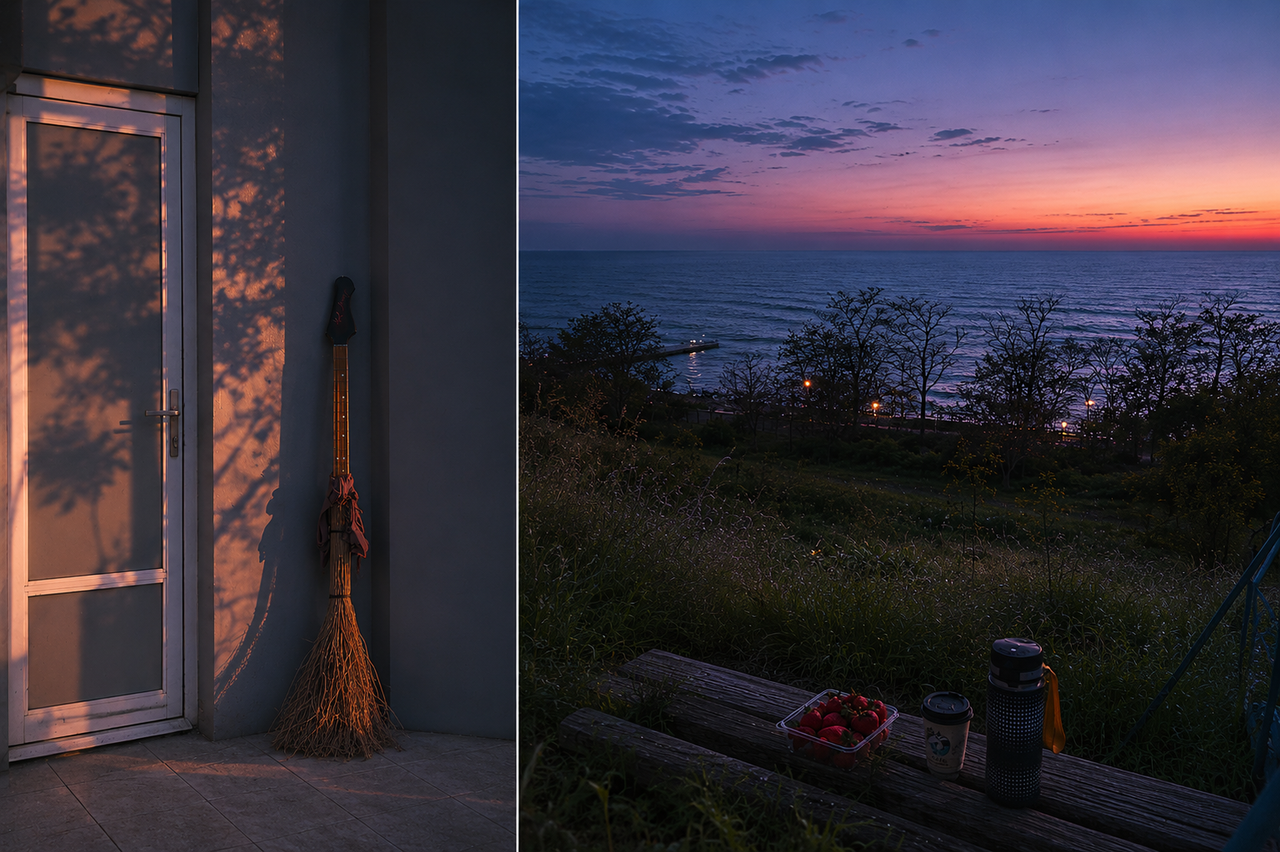
Несколько дней назад мне удалось выбраться в одно очень тихое место прямо над морем. Там почти никогда нет людей, только редкие отголоски музыки из заведений наверху, шум машин с дороги и ветер, который постоянно гуляет по склонам. Я сидел среди высокой травы и смотрел, как медленно наступают сумерки: сначала небо становится мягче, потом появляются первые звёзды, а следом спутники и огни, движущиеся над горизонтом. Когда-то, в 2022 году, любой движущийся огонёк в небе казался чем-то опасным, чем-то, от чего внутри всё сжималось. Сейчас же небо стало настолько насыщенным этими точками, что кажется почти живым, словно оно всё время движется, дышит, меняется, танцует)
И компанию в тот вечер мне неожиданно составили ёжики. Самые обычные, маленькие, шуршащие в траве рядом со мной. Они не убегали, только сопели и возились возле ног, будто ждали чего-то. У меня с собой была клубника, и я делился ею с ними, хотя прекрасно знаю, что ёжики куда больше любят мясо. Но в тот момент это казалось чем-то удивительно правильным - сидеть над морем, слушать ночной город вдали и кормить клубникой маленьких колючих существ, которые почему-то решили провести этот вечер рядом со мной.
В последнее время я всё чаще ловлю себя на желании уйти куда-нибудь с ноутбуком и просто писать среди людей, но в одиночестве. Есть в Одессе кафе с названием «Интроверт», и меня почему-то очень тянет туда. Может быть, из-за самого названия. Хочется однажды сесть там у окна с чашкой крепкого кофе, открыть пустую страницу и наконец написать что-то настоящее вне дома, не между звонками и делами, а в каком-то другом внутреннем состоянии.
И почему-то именно в тот вечер я снова вспомнил историю «Бурана». Советской космической программы, которая появилась как ответ американским шаттлам. Пятнадцать лет работы, тысячи инженеров, огромная страна, строящая корабль, который должен был летать в космос и возвращаться обратно. «Буран» действительно совершил свой единственный автоматический полёт, а для его транспортировки создали «Мрию», тот самый украинский Ан-225, крупнейший самолёт в мире. Но ирония этой истории в том, что всё это в итоге оказалось никому не нужным. После распада СССР программа умерла, сам шаттл годами стоял в ангаре, пока в начале двухтысячных на него просто не рухнула крыша. Столько лет труда, мечтаний, человеческой веры и в какой-то момент всё превратилось лишь в воспоминание и архивные фотографии.
Наверное, именно поэтому мне так страшно наблюдать, как быстро люди обесценивают прошлое, подвиги, чужую боль и даже целые поколения. Когда-то 9 мая воспринималось как что-то священное почти для всех. Сейчас отношение изменилось до неузнаваемости, но ведь те люди, которые действительно прошли войну, ещё живы. Их осталось очень мало. И, наверное, одна из самых страшных вещей в жизни это чувствовать, как пережитое тобой становится ненужным или забытым. Я хорошо знаю, что такое обесценивание. И знаю, как тяжело жить с этим ощущением внутри.
Хотя жизнь, как ни странно, всё равно продолжает цепляться за самые простые вещи. Сегодня, например, я снова ездил по секонд-хендам. Есть в этом какой-то почти детский азарт : заходить в один магазин, потом в другой, искать что-то своё среди сотен чужих вещей. В итоге я купил пять вещей по цене одной новой футболки из обычного магазина, и, конечно же, среди них снова оказались мягкие игрушки, которые я почему-то до сих пор очень люблю. Наверное, мне нравится не сама покупка, а процесс поиска, ощущение маленького живого приключения, где ты неожиданно находишь что-то, что почему-то вызывает радость.
Потом был рынок, свежие овощи для супа, обычный вечер, запах свежего базилика, сельдерея и другой зелени и летнего воздуха из окна. И где-то между всем этим я наконец занялся ремонтом своей гитары.
Скоро она снова станет живой.
Этой гитаре уже больше двадцати лет. Она появилась ещё тогда, когда я долго откладывал деньги на свой первый инструмент. За эти годы многое менялось: города, работа, люди рядом, обстоятельства. А она каким-то образом осталась со мной. Наверное, поэтому я отношусь к ней не просто как к вещи.
Когда я приехал забирать её из музыкальной лавки, неожиданно задержался там почти на час:
Этой гитаре уже больше двадцати лет. Она появилась ещё тогда, когда я долго откладывал деньги на свой первый инструмент. За эти годы многое менялось: города, работа, люди рядом, обстоятельства. А она каким-то образом осталась со мной. Наверное, поэтому я отношусь к ней не просто как к вещи. И вместе с ремонтом я снова оказался в музыкальной лавке. Наверное, для меня такие магазины всегда были особенными местами. Там редко встречаются случайные люди. Обычно это те, кто по-настоящему любит своё дело. Немного творческие, немного странные, иногда настолько увлечённые, что забывают о времени. Когда я пришёл забирать гитару, парень за прилавком не просто вернул мне инструмент. Он начал рассказывать про какие-то новые маленькие электроукулеле, компактные бас-гитары, необычные модели, которые недавно появились. Потом разговор перешёл на дерево, на то, как разные породы влияют на звучание инструмента, почему одна гитара живёт десятилетиями, а другая остаётся просто набором деталей. И в какой-то момент я поймал себя на том, что просто стою и слушаю. Наверное, я был первым посетителем тем утром, но дело было даже не в этом. Мне нравилось смотреть на человека, который настолько любит то, чем занимается. Он говорил о гитарах так, как другие говорят о любимых людях. И я вдруг подумал, что таких мест становится всё меньше. Может быть, мне только кажется, но современный мир всё чаще звучит иначе. Когда-то музыкантов узнавали по инструментам. У каждого была своя гитара, свой звук, своё лицо. Сейчас многое стало электронным, быстрым и удобным. А мне до сих пор ближе живая музыка. Та, в которой слышно прикосновение пальцев к струнам. Та, где есть небольшие ошибки, случайные шероховатости и дыхание человека. Наверное, потому что всё настоящее несовершенно. И именно поэтому живое. :::
А ещё мне всё чаще попадаются истории украинцев, которые уехали работать за границу: люди живут в машинах, вместе копят на квартиру, проходят через тяжёлую работу, постоянную усталость, бытовые сложности, но делают это вдвоём. И меня почему-то очень трогают такие вещи. Не успех, не деньги, а именно наличие рядом человека, с которым можно вместе идти к какой-то цели, даже через очень непростую жизнь.
Наверное, именно это я всё чаще начинаю ценить больше всего.
Не громкие слова.
Не достижения.
Не бесконечную гонку.
А возможность однажды просто сидеть рядом с кем-то вечером, смотреть на море, слушать ветер и понимать, что, несмотря ни на что, жизнь всё ещё продолжается.
Note translated in assistance with AI GPT
Hello to everyone who still reads me.
Sometimes it feels like there aren’t many people left, but perhaps that is exactly why I keep writing—not for grand ideas or important conclusions, but for the feeling that somewhere on the other side of the screen there is still someone willing to pause for a few minutes and simply share a fragment of another person's life.
A few days ago, I managed to escape to a very quiet place above the sea. There are almost never any people there—only distant echoes of music drifting up from restaurants below, the sound of cars passing along the road above, and the wind that endlessly wanders along the slopes. I sat in the tall grass watching the evening slowly arrive. First, the sky softened. Then the first stars appeared, followed by satellites and moving lights along the horizon. Back in 2022, every moving light in the sky seemed threatening, something that made your chest tighten instinctively. Now the sky is so crowded with those tiny points of light that it feels almost alive, as if it is constantly moving, breathing, changing, dancing.
Unexpectedly, I was joined that evening by hedgehogs. Ordinary little hedgehogs rustling through the grass beside me. They didn't run away. They simply snorted, shuffled around near my feet, and seemed to be waiting for something. I happened to have strawberries with me and shared them, even though I know perfectly well that hedgehogs would probably prefer meat. Yet somehow it felt exactly right—sitting above the sea, listening to the distant sounds of the city, and feeding strawberries to small prickly creatures that had, for reasons unknown to me, decided to spend the evening nearby.
Lately, I often catch myself wanting to take my laptop somewhere and simply write among people while remaining alone. There is a café in Odesa called "Introvert," and for some reason I keep thinking about it. Maybe it is the name itself. One day I would like to sit there by a window with a strong cup of coffee, open a blank page, and finally write something real—not at home, not between phone calls and responsibilities, but from a different state of mind altogether.
And for some reason, that same evening I found myself thinking again about the story of Buran. The Soviet space program that was created as an answer to the American Space Shuttle. Fifteen years of work. Thousands of engineers. An entire country building a spacecraft designed to travel into space and return home. Buran successfully completed its one and only automated flight. To transport it, the An-225 Mriya was built—the largest aircraft ever constructed.
The irony is that none of it was needed in the end.
After the collapse of the Soviet Union, the program died. The shuttle sat abandoned inside a hangar until, in the early 2000s, the roof simply collapsed on top of it. So many years of work. Dreams. Human belief. And at some point it all became little more than archived photographs and fading memories.
Perhaps that is why it frightens me to see how quickly people devalue the past, the sacrifices of others, entire generations, and even pain itself. There was a time when May 9th was regarded as sacred by almost everyone. Today attitudes have changed beyond recognition, yet many of the people who actually lived through that war are still alive. There are very few of them left. And perhaps one of the most painful experiences in life is realizing that what you lived through is slowly becoming irrelevant or forgotten. I know what it feels like to be diminished. And I know how heavy that feeling can become.
Yet life, strangely enough, keeps holding on through the simplest things. The other day I spent hours wandering through second-hand stores again. There is something almost childlike about it—moving from one shop to another, searching through hundreds of forgotten items, looking for something that somehow feels like yours. In the end, I bought five things for the price of a single new T-shirt. Naturally, among them were a couple of stuffed animals because, for reasons I still don't fully understand, I continue to love them. Perhaps what I enjoy isn't the purchase itself but the search—the feeling of a small adventure where you unexpectedly stumble across something that brings genuine joy.
Afterward there was the market, fresh vegetables for soup, an ordinary evening, and the smell of basil, celery, and summer air drifting through the window. Somewhere in the middle of all that, I finally got around to repairing my guitar.
Soon it will be alive again.
That guitar is more than twenty years old. I bought it after saving money for a very long time to afford my first real instrument. Over the years, cities changed. Jobs changed. People came and went. Life itself changed. Yet somehow that guitar remained. Perhaps that is why I can never think of it as just an object.
When I went to pick it up from the music shop, I ended up staying there for almost an hour. I've always loved places like that. Music stores rarely attract random people. Most of the people there genuinely love what they do. They're creative, slightly eccentric, and often so passionate about their craft that they lose track of time completely. The young man behind the counter didn't simply hand my guitar back to me. He started talking about tiny electric ukuleles, compact bass guitars, unusual new models that had recently arrived. The conversation drifted toward different types of wood, how they shape an instrument's sound, why one guitar seems to develop a soul over decades while another remains little more than assembled parts.
At some point I realized I had simply stopped talking and was listening.
Perhaps I was his first customer that morning, but that wasn't really the point. What fascinated me was seeing someone who genuinely loved what he did. He spoke about guitars the way other people speak about those they love. And suddenly it occurred to me that places like that are becoming rare.
Maybe it's just me, but the modern world seems to sound different now. There was a time when musicians were recognized by their instruments. Everyone had their own guitar, their own sound, their own identity. Today so much has become electronic, convenient, and immediate. Yet I still find myself drawn to live music. Music where you can hear fingers brushing against strings. Music that contains tiny imperfections, rough edges, and the breathing presence of another human being.
Perhaps because everything truly alive is imperfect.
And that is exactly what makes it real.
Lately I also find myself noticing stories of Ukrainians who left to work abroad. People living in cars together, saving for apartments, enduring difficult jobs, exhaustion, and endless everyday struggles—but doing it side by side. For some reason those stories move me deeply. Not because of success. Not because of money. But because there is someone beside them. Someone with whom they can move toward a goal together, even through a difficult life.
Perhaps that is what I value more and more these days.
Not grand words.
Not achievements.
Not endless striving.
But the possibility of simply sitting beside someone one evening, looking out at the sea, listening to the wind, and understanding that despite everything, life is still moving forward.
![[personal profile]](https://www.dreamwidth.org/img/silk/identity/user.png) oursin
oursin![[community profile]](https://www.dreamwidth.org/img/silk/identity/community.png)
![[syndicated profile]](https://www.dreamwidth.org/img/silk/identity/feed.png)



 Happy Wednesday and welcome back!