![[personal profile]](https://www.dreamwidth.org/img/silk/identity/user.png) shadowkat
shadowkat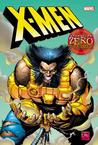 X-Men: Operation Zero Tolerance by Larry Hama
My rating: 3 of 5 stars
Started out with a great deal of potential, but somewhere in the middle meandered off-course. The writers built in way too many pointless subplots that took the reader away from the central theme and action.
Of the issues included in the collection, X-men and Wolverine were by far the most consistently written and stuck to the theme. X-Force meandered off-course, as did Generation X, and Cable. The collection hit its high point with Dr. Cecila Reyes, a mutant with a minor ability who just wanted to be a doctor, but because of genetic anomaly was being hunted. Her anomaly merely provided a small force field five inches from her skin, she still felt the impact of bullets but no lasting damage. She hides in plain sight, pretends to despise mutants, while trying to be a doctor, until she is outed by a bunch of government authorized machines hunting people like herself. Reyes is saved by a mutant superhero, part of the mutant underground movement or terrorist group, the X-men. And ends up being sucked into their cause against her will. They are social activists who save people and live their lives to further mutant rights in a peaceful manner, except their lives are extremely violent and they are constantly battling mutant revolutionaries, terrorists, and humans who want to exterminate them.
The other worthy subplot, is Mustang, a man who has been crippled in an accident, who seeks a miracle cure, but a doctor called Prospero turns him into a mutant killing machine against his will. Stating it's us against them. Wolverine, one of the mutant superheros/underground activists, manages to help Mustang rediscover his humanity, even while his friend, the leader of the group, Scott Summers, is critically wounded.
Then there's Jubilee's arc -- during which the writers examine how we justify torture and cruelty to keep ourselves safe from the other. The X-men writers explore how people who are genetically different are demonized for being different.
GW Bridge of Shield, best buds with Cable (who Bridge doesn't know is the leader of the X-men's son), states that as a human he fears the X-men because they present a danger to humans everywhere, and while that doesn't necessarily justify the extremes that Zero Tolerance went to... still.
How often do we generalize the other, put them in the same category as people who have terrorized us that happen to share characteristics? Bridge and his ilk see all mutants as the same. Not as individuals, but a group, to be feared.
And there, right there is his mistake. As the characters state - we are individuals, just like you. Just as all humans are not like the villain Bastian and Prospero who wish to exterminate all mutants, regardless of who they are or if they have any ability, not all mutants are insane serial killers. Some are like Dr. Reyes who just wants to be a doctor, or Scott Summers who is attempting to save people.
And some, like Marrow, deserve a second chance, have been disenfranchised and hurt and just need help.
This storyline is worthy of a good read. Unfortunately we are distracted by absurd subplots such as Thunderbolt's weird trip to another dimension, Jean Grey's jump to another universe to talk to Iron Man, and the whole Karkoa Island story bit in Generation X.
The problem with long-running serials is that they often jump around a lot. Going off on an absurd tangents that make little sense to new readers and bore readers who are not invested in that storyline.
So, three and a half stars for the core story - which discusses in depth the politics of hate and how it destroys everyone and everything it touches. There's a rather good monologue at the end of the collection, where Bobby Drake informs Bastion - that after his father was beaten by human right supremicists - he wanted nothing more than to go after the creeps and everyone associated with them. But watching his father fight to regain the ability to walk, to eat, etc - just because he'd chosen to stand up for his family, made him realize that's what they all have to do, fight against the hate, not give in to it, fight to be kinder, more compassionate, and show the world that they can live in peace.
He tells Dr. Reyes and Marrow, that as tempting as it to kill Bastion, to do so would make them no better than he is. Not to give in to the hate.
Cyclops arc
In regards to Cyclops, aka Scot Summers arc: Scott in this series is more of a supporting character. But it's very important to his arc for two reasons: 1) During the arc -- he is a leader throughout, and pushes his team to save lives, he's idealistic, and seen as a boy scout. Hopeful. Optimistic. And self-sacrificing. 2) He is critically injured during the arc. The bad guys insert a deadly bomb in his chest which his team mates with a great deal of team work and few supplies manage to safely extricate from his chest. But it does leave him weak. And he, and his wife, Jean Grey aka Phoenix leave the X-men in early retirement for a bit.
After he is healed - he tells Jean that they won the day. That things are looking up for the X-men.
He's hopeful and sees the best in humanity and his team, while she's more brooding and far less optimistic, worried about what the future will bring.
At this point in his arc - he's been through a lot of tragedy, but overall he's still happy. He's married. His friends are alive and well. They won the day. His son is wandering about safe out there.
He's still the idealistic, good man, who espouses his mentor, Charles Xavier's ideals. While Charles had to an extent betrayed them as Onslaught, he has forgiven him and does not hold that against him -- seeing it as a by-product of Charles actions against Magneto, which had been necessary at the time.
This Scott Summers still believes in his mentors dream that mutants and humans can live peacefully together.
General Arc
Underlines how violence and hate does not resolve problems on either side. When both sides engage in violence, the only result is destruction and pain. Generalizing about either side leads to disaster.
Bastion generalizes about mutants, seeing all as evil, despite evidence to the contrary - Jubilee who is compassionate towards her captor Daaria who decides to help her escape in part due to that compassion. Or Doctor Reyes who saves lives. Spiderman who interjects himself between the sentinels sent to kill Marrow, and saves Marrow's life, thinking to himself, while I'm not a mutant, they could decide I'm a freak at any moment. Or Jonah Jamsion - crack newspaperman who refuses to print the misinformation that Bastion is selling, or worse the information on the mutant underground, choosing instead to investigate Bastion who may have killed his reporter.
Not all humans are bad, any more than all mutants are bad. Both make mistakes. And individuals should not be held accountable for the choices of other individuals merely because they share similar genetic traits. You can't generalize. And to hate a person merely because they are different than you is a horrible and destructive thing.
It's not as preachy as it sounds, there's a lot more showing here than telling, which is what I like about these stories. And they use layers of metaphor, and sci-fi fantasy to get the point across. The Legacy Virus, referenced at various points in the story, is a metaphor for AIDS or any virus associated with a minority group.
The story also delves deep into the why's and wherefore's of hate, how it grows and takes root inside the human consciousness.
A good start to an interesting story arc.